thecreativespace
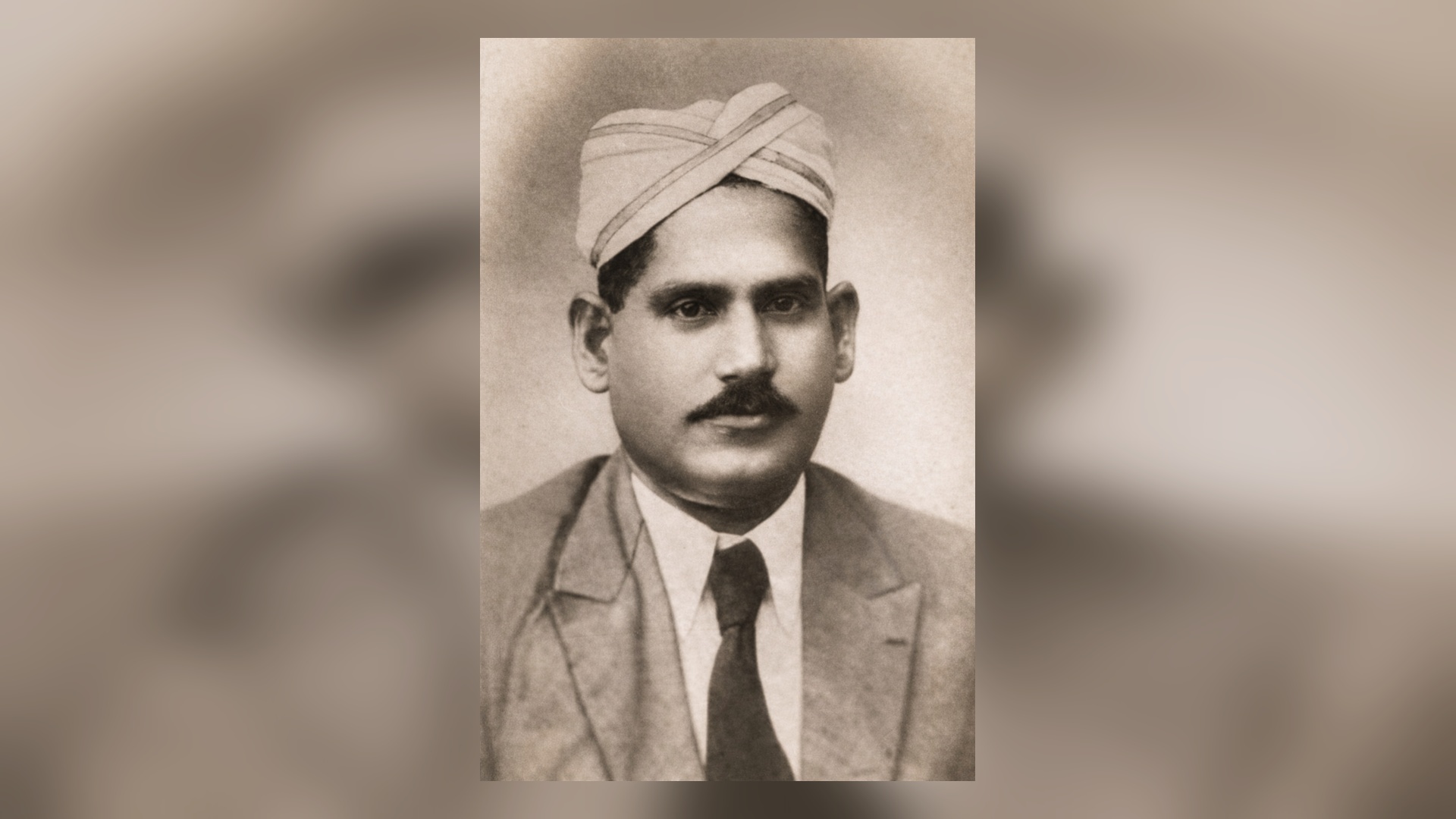
Memory has its own quiet timing. The thought of my grandfather Vaikom N. Ramakrishna Pillai returned to me unexpectedly as my wife Jayasree Ramakrishnan began working on a tribute to her own distinguished maternal grandfather, Dr. Suranad P.N. Kunjan Pillai. As she pieced together history and remembrance, I found myself drawn backward—into the shaded courtyards and echoing corridors of my childhood home, our Tharavad house Gowri Vilas at G. P. O. Lane, Puthenchanthai, Statue.
But long before he became the dignified patriarch of our household, my grandfather’s story had begun in Vaikom.
He was born in 1882 at Kizhakuncherimel Vadakkemuri in Vaikom, into a Kerala that was still under princely rule, where tradition and reform were beginning to stir uneasily against each other. After passing his B.L. examination, he began legal practice in 1911 at the Paravur District Court. By 1917, he had moved to the High Court at Trivandrum, steadily building a reputation for scholarship and integrity.
Public life soon followed.
In 1922, he was elected to the Travancore Legislative Assembly from the Vaikom–Ettumanoor constituency. Those were years of social ferment in Kerala. He participated in the historic Vaikom Satyagraha of 1924, a defining movement against untouchability, and was part of the Savarna Jatha led by Shri. Mannathu Padmanabhan, advocating social reform during a turbulent period in Travancore’s history.
Between 1926 and 1931, he served as Professor and Hostel Warden at Trivandrum Law College, shaping young legal minds. Later, he assumed leadership of the Nair Service Society after the tenure of Shri. Changanasserry Parameswaran Pillai, further cementing his role in community affairs.
He was elected to the Sri Chithira State Council in 1935 and later to the Sri Moolam Assembly from the Vaikom–Kottayam constituency in 1937. In 1943, he was appointed Government Lawyer in Alappuzha, and in 1944, he became Legal Remembrancer to the Government of Travancore. In that capacity, he worked closely with the Dewan, Shri. C. P. Ramaswami Iyer, during one of the most politically charged periods in the State’s history.
His service extended across numerous committees and positions—Franchise Committee Convener, Revenue Board Member, Reforms Committee Member, Constitutional Advisor, and Special Law Officer for Thiru-Kochi. After retiring from government service in 1950, he continued his public engagement as Law Officer to the Thiruvithamkoor Devaswom Board and as a member of the Kuttikrishna Menon Committee, which worked toward unifying Devaswom laws in Kerala. He also served as a member of the Trivandrum Cooperative Bank.
These titles and responsibilities speak of a life deeply embedded in governance and reform.
By the time I was ten years old, he was in his early eighties. The public figure had softened into a serene elder, though the discipline remained intact. Dressed simply in a dhoti, a Rudraksha chain resting on his chest, Vibhuti marking his broad forehead and upper arms, he carried himself with quiet authority. Nothing about him was ostentatious. His presence alone commanded respect.
What defined him most in my childhood was the rhythm of his days.
He rose early—often before six—and would descend the narrow, rickety, wooden staircase from his room upstairs with steady steps. In the central hall, before a large framed image of Goddess Mahalakshmi presiding over the churning of the Ocean of Milk (Palazhimathanam by the Asuras and Devas), he would stand in silent prayer. The day began with devotion.
Thereafter came ablutions, a simple drink of milk, and then nearly two hours in the small front garden, trimming leaves and tending plants with patient precision. Looking back, I see how even this mirrored his temperament: order cultivated gently, without harshness.
Following breakfast and his careful reading of the newspaper, he would prepare for his regular shave and a hot water bath. My grandmother supervised the heating of water infused with dried gooseberry pellets which was for his head wash. I still remember the deep yellow hue of that water shimmering inside a large copper vessel. The water itself was heated in the backyard using cow dung patties and coconut husk as fuel—an everyday domestic detail that fascinated us children far more than the solemnity of the ritual. The faint smell of smoke, the sight of neatly stacked patties drying in the sun, the crackle of fire beneath the cauldron—these were part of the texture of our days. What seemed ordinary then now feels like the imprint of another era.
Before entering the pooja room, he would stand in the open-air corridor of the Nalukettu, mixing sandalwood paste with water from a polished copper kindi and applying it carefully along with Vibhuti on his forehead and arms. For nearly an hour, he prayed. We instinctively understood that this was sacred time.
He never lectured us about discipline. He lived it.
The same discipline revealed itself in his professional life through his mastery of language and style of composition. Those who worked with him often spoke of the sharpness and succinctness of his written expression. Once he drafted a legal opinion, a legislative note, or an official submission, not a single word could be added or removed without disturbing its balance. In the field of law—where clarity determines consequence—such precision was not merely stylistic elegance, it was responsibility. Language, in his hands, was measured, deliberate, and exact.
After lunch came a short nap on the large bamboo-and-wood charukasera, newspaper still clasped in his hand. We children would attempt, mischievously, to take the paper away without waking him. He would invariably awaken at just the right moment. Never angry, never irritated, he would simply ask, “Do you want the paper?” In that gentle question lay both affection and authority.
It was during these years that my father was posted to Nagaland as Deputy Superintendent of Special Armed Police, and we moved into the Tharavad in the 1960s. I was studying in Malayalam medium at a nearby government school.
Once again, my grandfather quietly altered the direction of my life.
He took me to St. Joseph’s School in Trivandrum and introduced me to its headmaster, Rev. Fr. Kuncheria. My grandfather and the renowned headmaster knew each other well. I was admitted to the English medium in the fifth grade. That same evening, he enrolled me as a junior member of the British Library near the YMCA Hostel. At the time, I saw it merely as a new experience. Only later did I understand it as foresight—a deliberate widening of horizons. It laid the foundation of my entire education. After completing the fifth and sixth grades, I was transferred to Loyola School, Sreekaryam, Trivandrum for the simple reason that Rev. Fr. Kuncheria S.J. was transferred to that school from St. Joseph’s. Grandfather’s logic was that I should study where Fr. Kuncheria was the principal.
Grandfather believed that education was not only about curriculum, but also about mentorship, exposure, and intellectual discipline.
Years later, when I completed the ISC in 1973 with good marks in English Literature and went on to pursue English for higher studies, I realised the arc he had quietly drawn for me long before I could perceive it.
My father passed away before I completed graduation. Those were turbulent years in the country as well. Through it all, my grandfather remained steady—a quiet pillar. He lived long enough to see me through my postgraduate studies before he himself departed from this world.
Today, when I reflect on him, I see not only the public servant, the legislator, or the scholar of law. I see a man who believed that a life must have rhythm—that devotion and duty could coexist, that discipline was a form of reverence, and that education was the finest inheritance one could give a child.
Some legacies are preserved in official records and state archives. Others are carried quietly within the habits we keep, the values we uphold, and the choices we make when no one is watching.
Even now, when I rise early, tend to a plant, pause before beginning the day’s work, or lose myself in the pages of a book, I sense the gentle continuity of his presence. The measured cadence of his days has, in some small but enduring way, shaped my own.
Time moves forward, but certain rhythms remain.
And in that rhythm, he lives on.
About the Author
V. Ramakrishnan Nair is the grandson of Shri. Vaikom Ramakrishna Pillai. A former Deputy Manager at Air India, Trivandrum, he writes from lived memory to preserve the legacy of a life devoted to law, reform, discipline, and family.